Category Archives: unkategorisiert

A Chorus of Cruelty, on Giovanni Verga

‘Cruelty,’ wrote Emil Cioran, ‘is a sign of election, at least in literature. The more talented a writer is, the more ingeni¬ously he puts his characters in situations from which there is no escape; he persecutes them, he tyrannizes them, he traps them in dead ends, he forces them to run the whole gamut of their agony.’
Of no writer could this provocative intuition be more true than the great Sicilian novelist Giovanni Verga. Yet eighty years after his death the author of the Cavalleria rusticana continues to be presented to the public as first and foremost a humanist worthily celebrating the passions of the ordinary man and drawing attention to his difficult lot through well-documented description of changing social conditions. G. H. McWilliam concludes the introduction to his new translation of Verga’s Sicilian novellas thus:

‘Verga’s great merit lies in his ability to arouse compassion whilst avoiding completely all traces of sentimentality, and this is because he presents life as it is, free from the distortions of idealistic perspec¬tives. His narratives are an unfailing source of interest, not only to those who care about good literature, but also to the historian, for whom his novels and short stories provide an invaluable record of social conditions at a critical stage of modern Italian history.’

Reading such reassuring words one is bound to ask whether there mightn’t be some taboo that prevents us from saying what it really is that draws us so powerfully to this man’s violent and irretrievably pessimistic stories. Continue reading →

Art and Eschatology


Eschatology is enjoying a heyday.
Global warming, global terrorism, food crises, water crises, oil conflicts, culture wars, have all intensified the impression that human ‘civilization’ is accelerating towards self destruction. These are circumstances in which art and artists tend to get political or, alternatively, resign themselves to insignificance.
In literature, the phenomenon is exacerbated by the difficulty many people have reading for anything beyond content and immediately communicated emotion. As Borges once remarked, since most critics have little sense of the aesthetic, they have to find other criteria for judging a book, political persuasion being the most obvious; it is almost a rule that the big literary prizes go to those writers involved in a political struggle or simply siding with the victims in the world’s upheavals. Indeed, a political ‘alibi’ of this kind seems almost essential for a ‘serious’ novelist nowadays.
At such a moment, it may be worth looking at the work of a man who had a rather unusual take on the relationship between art and politics, who saw the two as intimately related and mutually conditioning, art being allowed a certain, perhaps even pervasive influence, but not in the crass sense of grinding a political axe, or even exploring controversial situations; on the contrary, art might be most ‘useful’ when, to all intents and purposes, most ‘irrelevant’. Continue reading →

Prajapati

Prajapati was alone. He didn’t even know whether he existed or not.

I too am alone. It’s fairly early in the morning. About 8.30. I am translating a book by an Italian writer called Roberto Calasso. The book is called Ka and amounts to a creative reconstruction of Indian mythology. The lines above are the first lines of the second chapter. This chapter deals with the god Prajapati, the oldest and first god, the Progenitor, and what is worrying me is that the Italian says, ‘Non sapeva neppure se esisteva o non esisteva.’ Should I have written: ‘He didn’t even know whether he existed or didn’t exist’? Why does that sound rather odd to me in English, but not in Italian? Was the repetition of a key verb like ‘exist’ important? How far does the English auxiliary ‘didn’t’ truly recall the verb it picks up? I can’t decide. And frankly, although alone, I am very aware of existing. I tend to fidget when there’s a problem, right hand thrust in my hair, toes twitching in sandals, because the day is hot, promises to be hotter. For a moment my body gets in the way of my mind. Then I decide that the best thing you can do with an intuition is go with it. Continue reading →

Hell & Back

“Good Master, what shall I do to inherit eternal life?” the rich man asks Jesus. “Sell all that thou hast, and distribute unto the poor,” is the reply, “and thou shalt have treasure in heaven.” At which the rich man is sorrowful and turns away. “It is easier,” Jesus remarks to his disciples, “for a camel to go through the eye of a needle, than for a rich man to enter into the kingdom of God.”
Some 1300 years later, banished from his native Florence and thus largely bereft of this world’s goods, Dante Alighieri, politician, poet, and philosopher, was nevertheless still having trouble threading the eye of that needle. It seems there are other attachments aside from wealth that make it difficult for us to turn our backs on this world. Passion for one: Dante had loved a woman who rejected him, married someone else, then compounded the affront by dying young and thus remaining forever desirable. Ambition was another: aside from a cycle of secular love poems, Dante had written a provocative work of political philosophy suggesting the kind of state in which man would be free to pursue perfection. It was not a scenario in which divine grace appeared to be very important. Now, quite suddenly, he found himself confused, disoriented:

Midway in the journey of our life
I came to myself in a dark wood,
for the straight way was lost.

So begins the Inferno. It’s a feeling that many approach¬ing forty, as Dante was when he wrote the lines, will recognise. How to proceed? As daylight breaks in the dark wood, the poet sees a mountain before him. It is Purgatory, it is the way to Paradise. All is well. But suddenly three ferocious beasts are blocking his path. The needle’s eye is defended by a wolf, a leopard, a lion. They are lust pride and avarice, say some commentators. They are incontinence malice and mad brutishness say others. They are Dante’s Florentine enemies the French monarchy and the papacy, say yet others. Whatever or whoever, they are insuperable. Continue reading →

Action Please!

The ancients loved action in their stories, and above all violent conflict, which was the testing ground of heroes. Here’s Homer:

Then royal Aias in his turn launched his long-shadowed spear. The heavy weapon struck the round shield of Priam’s son. It pierced the gleaming shield, forced its way through the ornate cuirass, and pressing straight on, tore the tunic on Hector’s flank. But he had swerved, and so avoided death. And now the pair, when each had pulled his long spear out, fell on each other like flesh-eating lions, or like wild boars, whose strength is not to be despised… Continue reading →

Cleaver

In the autumn of 2004, shortly after his memorable interview with the President of the United States and following the publication of his elder son’s novelised autobiography, cruelly entitled Under His Shadow, celebrity journalist, broadcaster and documentary film-maker Harold Cleaver boarded a British Airways flight from London Gatwick to Milan Malpensa, proceeded by Italian railways as far as Bruneck in the South Tyrol and thence by taxi, northwards, to the village of Luttach only a few kilometres from the Austrian border, from whence he hoped to find some remote mountain habitation in which to spend the next, if not necessarily the last, years of his life. Ratting on your responsibilities, had been Amanda’s inter¬preta¬tion. She is the mother of his children. The responsibilities of a man at my time of life, the eminent and overweight Cleaver told his partner of thirty years, can be no more than financial, and, acting on a decision taken only hours before, he signed over to her a very considerable sum of money of which neither she nor their three surviving children could possibly have any immediate need, with the exception perhaps of the younger son Phillip who was always in need, but never accepted anything. Continue reading →

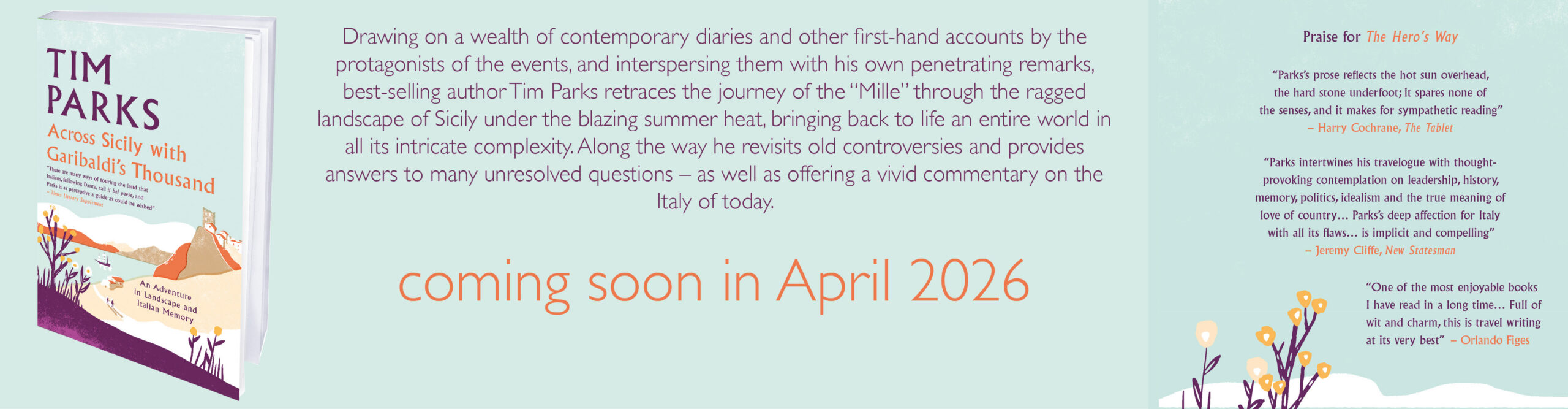
Garibaldi – The Fighter

Suddenly you are looking in his eyes. Officially they’re brown, but for you they’ll always be blue. He is speaking in a soft, seductive voice. Glory if you follow, eternal shame if you don’t. Rome or Death. In a moment your destiny shifts. Incredibly, you have volunteered. You are given a red shirt an obsolete rifle, a bayonet. You are taught to sing a hymn full of antique rhetoric recalling a magnificent past, foreseeing a triumphant future. You learn to march at night under all weathers over the most rugged terrain, to sleep on the bare ground, to forget regular meals, to charge under fire at disciplined men in uniform. You learn to kill with your bayonet. You see your friends killed. You grow familiar with the shrieks of the wounded, the stench of corpses. If you turn tail in battle, you will be shot. Those are his orders. If you loot you will be shot. You write enthusiastic letters home. You have discovered patriotism and comradeship. You have been welcomed by cheering crowds, kissed by admiring young women. Italy will be restored to greatness. From Sicily to the Alps your country will be free. Then, with no warning, it’s over. A politician has not kept faith. An armistice has been signed. Your leader is furious. You hardly understand. Rome is still a dream. Disbanded, you receive nothing: no money, no respect, no help to find work. But years later when he calls again, you go. You will follow him to your death.
Such was the experience of many thousands of Italians who volunteered to fight with the insurgent, adventurer and patriot Giuseppe Garibaldi in the series of uprisings, battles and full-scale wars that finally brought about a unified and independent Italy in 1860. The long and mountainous peninsula had been broken up into a dozen and more states after the collapse of the Western Roman Empire in the fifth century. Through the late Middle Ages and the early Renaissance these had at least been run by Italians, but around 1500 French, Spanish and later Austrians armies moved in to place client monarchs on Italian thrones and in some cases to annex territory directly. Continue reading →

Latin Lover Meets Lazio

Is there any more subtle relief than when, opening your wallet to pay some miserable bill, you find between the bank-notes a ticket for a big match: “Lazio vs Verona, Stadio Olimpico Roma. Settore ospiti.” Future pleasures assured, strong emotions guaranteed, it no longer seems so bad shelling out for some ridiculous request of the wife’s, some expensive necessity of your kids’ education.
And can there be any finer feeling than that moment, walking north along the Tiber out of Rome, when the casual Sunday passers-by are all at once transformed into a purposeful crowd, the lads with their flags, the old men with their scarves and seat cushions? People are headed for the stadium. Only an hour and a half to go before kick off.
Beer and sandwich beside me, I sat on the parapet of the Ponte Duca D’Aosta to soak up the scene and see what the local paper had to say about the game. After yet another defeat, the Hellas boys are in disarray. Their big Danish central defender Martin Laursen has accused his team-mates of not trying. Perhaps the team is about to go to pieces.
But Il Messaggero had nothing to say about the explosive situation in Verona’s dressing room. Instead the paper was concentrating all its attention on another dysfunctional family: in the small northern town of Novi Ligure a sixteen year old girl and her boyfriend had stabbed to death the girl’s mother and younger brother. “She was a completely normal and very charming girl,” says the next door neighbour. Continue reading →

Night Walk

The Ston’ench, so-called, or so pronounced, closed a while back, robbing us of our only local. Now it has reopened as Il Ranch Roccie Rosse and late on a Saturday evening, under considerable pressure from a bored twelve-year-old, I and my wife Rita are being pushed out of the house to go and investigate. “At least a Coke,” she demands.
That’s the Stonehenge, for those unfamiliar with an Italian take on English names, and the Red Rock Ranch. The place is just over a mile to the south following one of the steep ridges that run down from the Alps into the north Italian plain.
“Only if you walk it,” I tell Lucia.
It’s a condition that will usually stymie any proposal coming from a daughter who is sloth incarnate. But the girl is immediately on her feet rummaging for torches. A night walk is different; especially cross-country in pitch dark or starlight. We’ll have to pass the Witches’ Fountain, the Pilotòn, the Castello di Montorio. Lucia loves horror films. She loves being safely scared. “But Dad can walk ahead,” she says slamming the door behind us, “to break the cobwebs across the path.” She hates cobwebs. Continue reading →

Männerbeschwerden der peinlichen Art

Tim Parks: Die Kunst stillzusitzen.

Eine Rezension von Dr. Eberhard Falcke im DLF Büchermarkt. 04.03.2011

In der großen Tradition der Selbstanalyse und Selbstaufklärung des westlichen Individuums steht das neue Buch von Tim Parks. Fesselnd schildert er den Schmerz im Beckenboden, den nächtlichen Harndrang, und das, ohne zu bekehren.

Der Schmerz ist ein klassischer Auslöser für Literatur, sei es der existenzielle, amouröse, psychische oder geistige. Selten jedoch geht es um einen so konkreten, nicht nur peinigenden, sondern auch peinlichen Schmerz, wie im neuen Buch von Tim Parks. Denn dieser Schmerz wütet im Sitzfleisch – oder anatomisch korrekt ausgedrückt: im Beckenboden. Und da er mit häufigem nächtlichem Harndrang verbunden ist, erscheint er zunächst als ein ernster Fall von Prostatabeschwerden. Von der ersten Seite an läßt Parks keinen Zweifel daran, dass es hier um ein Männerleiden geht, an dem er selbst jahrelang gelitten hat.

“Das war wirklich meine eigene Erfahrung. Als ich gezwungen war, mich mit dieser Krankheit auseinanderzusetzen, anstatt das einfach dem Arzt zu überlassen, entdeckte ich, wie sehr sie ein Teil meines Lebens war. Und dadurch begann ich, mein Verhalten zu begreifen. Das war unglaublich wichtig, es war die größte Lernerfahrung, die ich gemacht habe, seitdem ich aus der Wiege kam. Und es war keine intellektuelle Erfahrung, es waren Einsichten und Kenntnisse, die sich mir aufdrängten, unabhängig von jeder intellektuellen Reflexion.”

Ein wahres Abenteuer also, wenn auch keines, das sich jemand wünschen würde. Anfangs war Parks durchaus bereit, sich auf die Ärzte zu verlassen. Doch bald stellte sich heraus, dass die Diagnosen nie so ganz ins Schwarze trafen, dass die Heilungsprognosen der geplanten Eingriffe sich immer wieder als vage und ungewiss darstellten. Also übernahm der Patient zunehmend die Initiative. Er begann Erkundigungen einzuziehen, Krankheitsbilder zu studieren, sich selbst zu beobachten und im Internet zu recherchieren. Irgendwann merkte er, dass sich da ein Erzählstoff entwickelte, der ihn mehr betraf als manch anderer.

“Als ich diese chronischen Schmerzen und all die Probleme beim Wasserlassen hatte, war es das Letzte, was ich wollte, darüber zu reden. Die ersten Seiten waren schwierig, denn: Wie macht man das, über die Probleme mit den Toilettenbesuchen zu reden, über das häufige Aufwachen in der Nacht, die Schmerzen und all das? Also setzte ich mich hin und schrieb die erste Szene, wo der Arzt die Skizze von der Prostata macht. Und da war es. Ich wusste einfach: Das ist die richtige Art, anzufangen.”

Und merkwürdig genug: Das Buch entwickelt sogleich einen beachtlichen Sog. Das hat viel weniger mit dem Thema zu tun, sondern mit der Art, wie der Autor es angeht. In diesem Fall gilt der Satz des Comte de Buffon ganz besonders: Der Stil, das ist der Mensch selbst. Denn Tim Parks verhandelt eine höchsteigene Angelegenheit und darin zeigt sich der persönliche Stil noch mehr als sonst. Dieser Stil ist lebendig, kritisch, offenherzig und genau, sowohl in der Sprache als auch im Denken.
Aus der Welt der Ärzte und ihrer Schulmedizin sind bald keine entscheidenden Wegweisungen mehr zu erwarten. Literatur und Philosophie bieten keine rettenden Hinweise, doch immerhin ein paar vergleichbare biografische Fakten oder gedankliche Motive. Thomas Bernhard und T.H. Lawrence, Montaigne und Rousseau kommen dem Geplagten in den Sinn. Natürlich drängt sich die Frage nach psychosomatischen Zusammenhängen auf. Als Parks aber einen ayurvedischen Arzt in Delhi konsultiert, belehrt dieser ihn, dass von Psychosomatik nur jene reden, die daran glauben, dass Körper und Geist je getrennt sein könnten. So erweitern sich im Lauf der Zeit die Perspektiven, ohne dass Schmerzen und Harndrang nachlassen.

“Als ich beschloss, darüber zu schreiben, wurde mir bewusst, dass sich im Zeitraum von drei oder vier Jahren sehr klare Phasen unterscheiden ließen. Am Anfang stand die Periode der chronischen Schmerzen, dann kam eine Zeit völliger Verwirrung und dann folgte der Druck, andere Möglichkeiten und Auswege zu suchen, sonst steckt man im Gefängnis und das war’s dann. Als ich über das Buch nachdachte und darüber, wie ich mich verändert hatte, wie meine Skepsis sich verändert hatte, merkte ich, dass viel von der vergangenen Skepsis auf Angst beruhte. Und dass es nicht intelligent ist, etwas nicht zu versuchen.”

Eines Tages stieß Parks bei Internetrecherchen auf das Selbsthilfebuch zweier amerikanischer Ärzte mit dem Titel “Kopfschmerzen im Becken”. Darin fand er Symptome beschrieben, die mit seinen eigenen verblüffend genau übereinstimmten. Demnach ging es weniger um die Prostata als um Verkrampfungen der Muskulatur im Beckenboden. Als Gegenmittel wurden genau beschriebene Entspannungsübungen empfohlen.
Parks probierte sie aus und das war der Durchbruch zur Linderung. Außerdem begann er, einige Prägungen seiner Persönlichkeit ins Auge zu fassen. Er ist der Sohn eines anglikanischen Pfarrers. Die Strebsamkeit und den Ehrgeiz des Vaters erkannte er auch an sich selbst. Ganz zu schweigen von der Vorherrschaft seines obsessiven Geistesleben über alle Belange des Körpers. Zwanzig Bücher hat er nicht nur geschrieben, sondern auch in angespanntester Schöpfungsarbeit ersessen. Er fragt sich: “War es möglich, mit 51 Jahren dieses angespannte und irgendwie, so schien mir, sprachbestimmte Verhalten zu ändern?” Parks entwickelte seine Entspannungsübungen weiter und landet schließlich bei einer klassischen Form der indischen Meditation. Trotzdem gebärdet er sich nicht als Überläufer zur östlichen Weisheit.

“Ich hasse das Wort Meditation. Außerdem muss man wissen, dass das Sanskrit-Wort für Meditation nichts anderes bedeutet, als geistige Disziplin. Das ist viel interessanter. Man muss nirgendwo hingehen, um das zu praktizieren. Die Leute gehen nach Indien. Warum? Man hat seinen Geist hier, man muss dafür nicht dort sein. Insofern war das Schreiben dieses Buches ein ständiges Wandern über ein Minenfeld mit dem Bewusstsein, dass man Gefahr läuft, sich törichterweise für die falschen Dinge zu begeistern. Oder die Schulmediziner über die Maßen zu kritisieren. Ich glaube wirklich, die wollten für mich das Bestes tun, ich denke nicht, dass sie sich wie Scharlatane aufgeführt haben.”

Parks’ Buch ist weder Medizinkritik noch Selbsthilferatgeber, es deutet nicht die Krankheit als Weg und es verspricht nicht die Heilung westlicher Zerrissenheit durch östliche Spiritualität – obwohl all diese Bereiche berührt werden und noch vieles mehr, wie etwa die Leidenschaft für Kajakfahrten im Wildwasser. Auch, nachdem Parks den Durchbruch zu tieferer Einsicht und Linderung geschafft hat, verzichtet er darauf, seine durchaus beachtlichen Erfahrungen in Botschaften oder missionarische Ratschläge umzuschmieden.

“Sie müssen bedenken, dass ich als Sohn einer evangelischen Familie aufwuchs. Daher halte ich nichts vom Bekehren, das kann ich nicht, das will ich nicht. Und ich würde mich furchtbar schuldig fühlen, wenn ich anfinge, den Leuten zu sagen, wie sie ihre Probleme lösen sollen.”

“Die Kunst stillzusitzen” steht in der großen Tradition der Selbstanalyse und Selbstaufklärung des westlichen Individuums. Das macht dieses Buch so fesselnd, überzeugend und unverwechselbar. Kaum zu glauben, dass derlei sogar von Männerbeschwerden der peinlicheren Art angestoßen werden kann.

Buchinfos:
Tim Parks: Die Kunst stillzusitzen. Ein Skeptiker auf der Suche nach Gesundheit und Heilung. Aus dem Englischen von Ulrike Becker. Kunstmann Verlag, München 2010. 364 Seiten; 24,90 Euro.

Der Beitrag zum Nachhören